
Tools hub
Precision toolsfor real-worldprotocols.
Cost, half-life, clearance, interaction, reconstitution, and safety workflows - designed to turn raw numbers into better protocol decisions.
- Peptide Tools
- Peptide Glossary
- All tools
- Featured
- Calculators
- Safety & research
- Utilities
- Peptide Glossary
- A
- B
- C
- D
- E
- F
- G
- H
- I
- J
- K
- L
- M
- N
- O
- P
- Q
- R
- S
- T
- U
- V
- W
- X
- Y
- Z
Featured
Fact-Check a Peptide Claim
Read moreDrop an Instagram or TikTok link and get an AI-powered verdict on every peptide claim — backed by PubMed, Europe PMC, and Semantic Scholar. See if the science actually checks out.
Opens: /check
Close
Calculators
Dosage Calculator
Read moreConvert target dose (mcg) to syringe units based on vial concentration.
Opens: /calculators/dosage
Close
Reconstitution Calculator
Read moreCalculate concentration (mcg/mL) after mixing peptide with bacteriostatic water.
Opens: /calculators/reconstitution
Close
Reconstitution Chart
Read moreTable of BAC volumes, concentration (mcg/mL), and syringe units for a target dose.
Opens: /tools/reconstitution-chart
Close
Unit Converter
Read moreConvert between mcg, mg, and IU for peptide dosing.
Opens: /calculators/unit-converter
Close
Safety & research
FDA Status Tracker
Read moreSee which peptides are FDA-approved, Category 2, or research-only.
Opens: /tools/fda-status
Close
Peptide Half-Life Guide
Read moreSearch peptide half-life references with route and dosing context.
Opens: /tools/half-life
Close
Clearance Estimator
Read moreEstimate remaining peptide percentage over time using half-life decay.
Opens: /tools/clearance-estimator
Close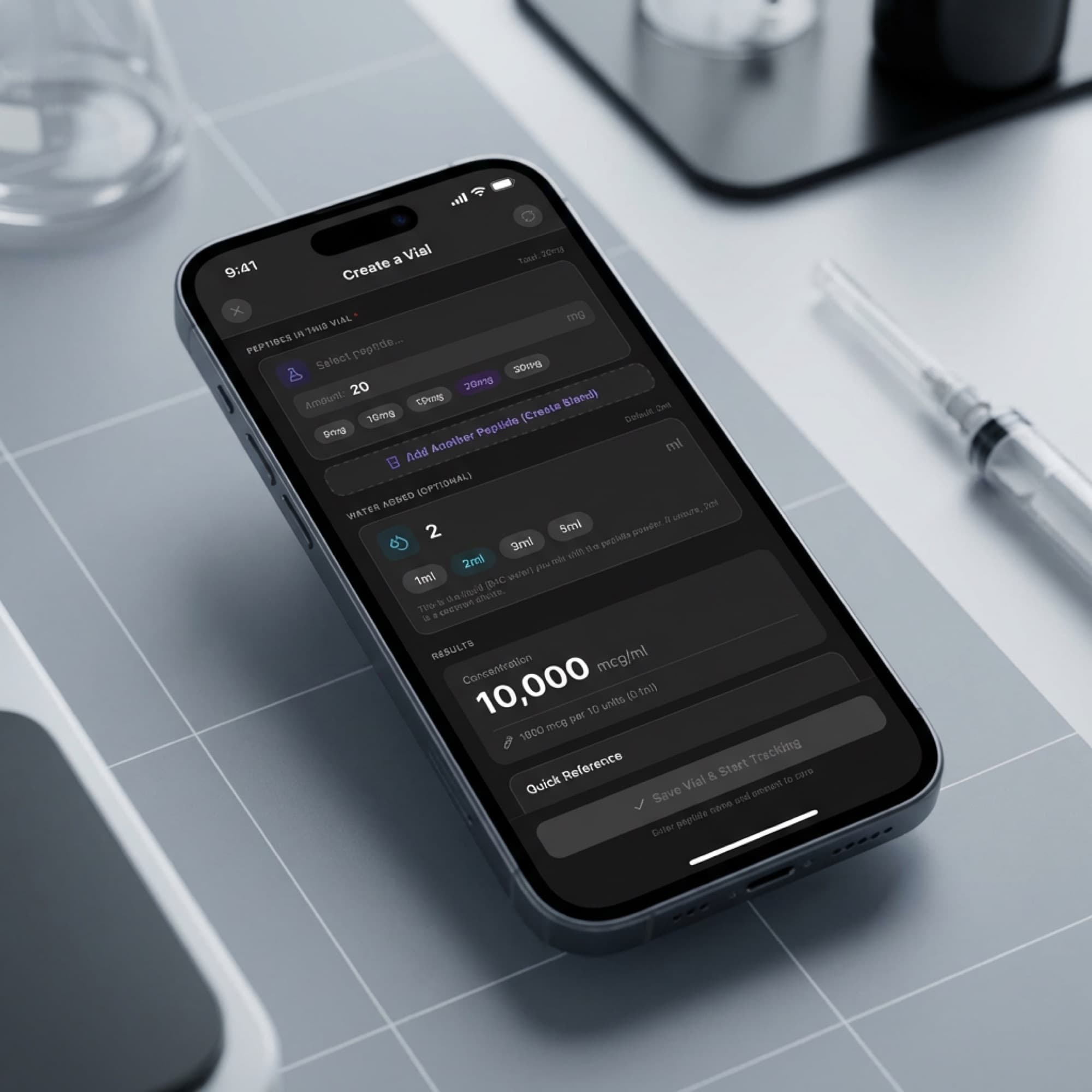
Peptide Shelf Life Guide
Read moreTop 50 common peptides with lyophilized and reconstituted storage windows.
Opens: /tools/peptide-shelf-life
Close
Cost Per mg Calculator
Read moreCompare vial offers by true cost efficiency and dose-level cost.
Opens: /tools/cost-per-mg
Close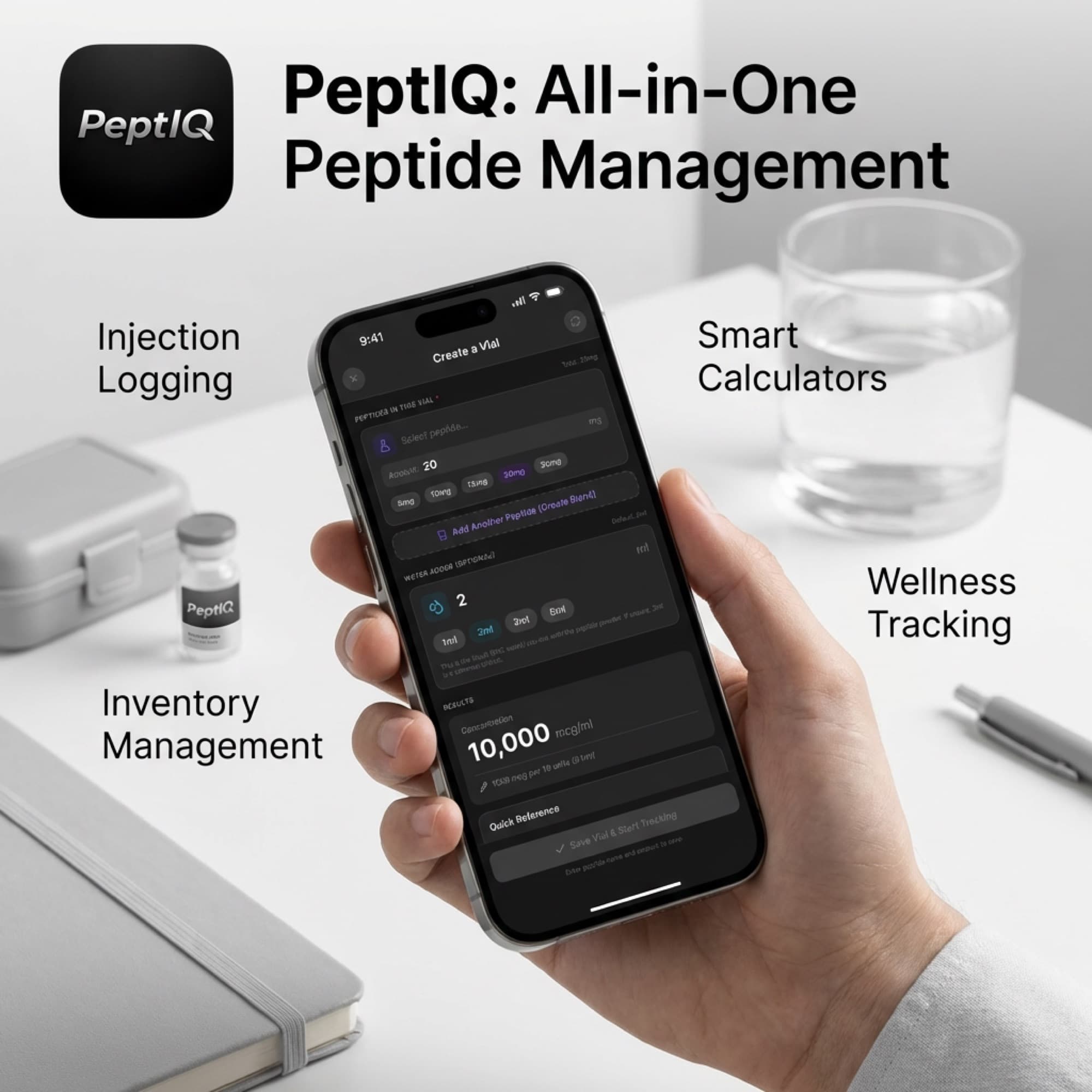
BAC vs Sterile Water
Read moreSearch which peptides are commonly mixed with BAC versus sterile water and why.
Opens: /tools/bac-vs-sterile-water
Close
Interaction Checker
Read moreCheck known interactions and safety when combining 2–5 peptides.
Opens: /tools/interaction-checker
Close
Cost Comparison
Read moreIllustrative monthly cost literacy for branded, clinic, and compounding-when-lawful ranges. Not a vendor directory.
Opens: /tools/cost-comparison
Close
Utilities
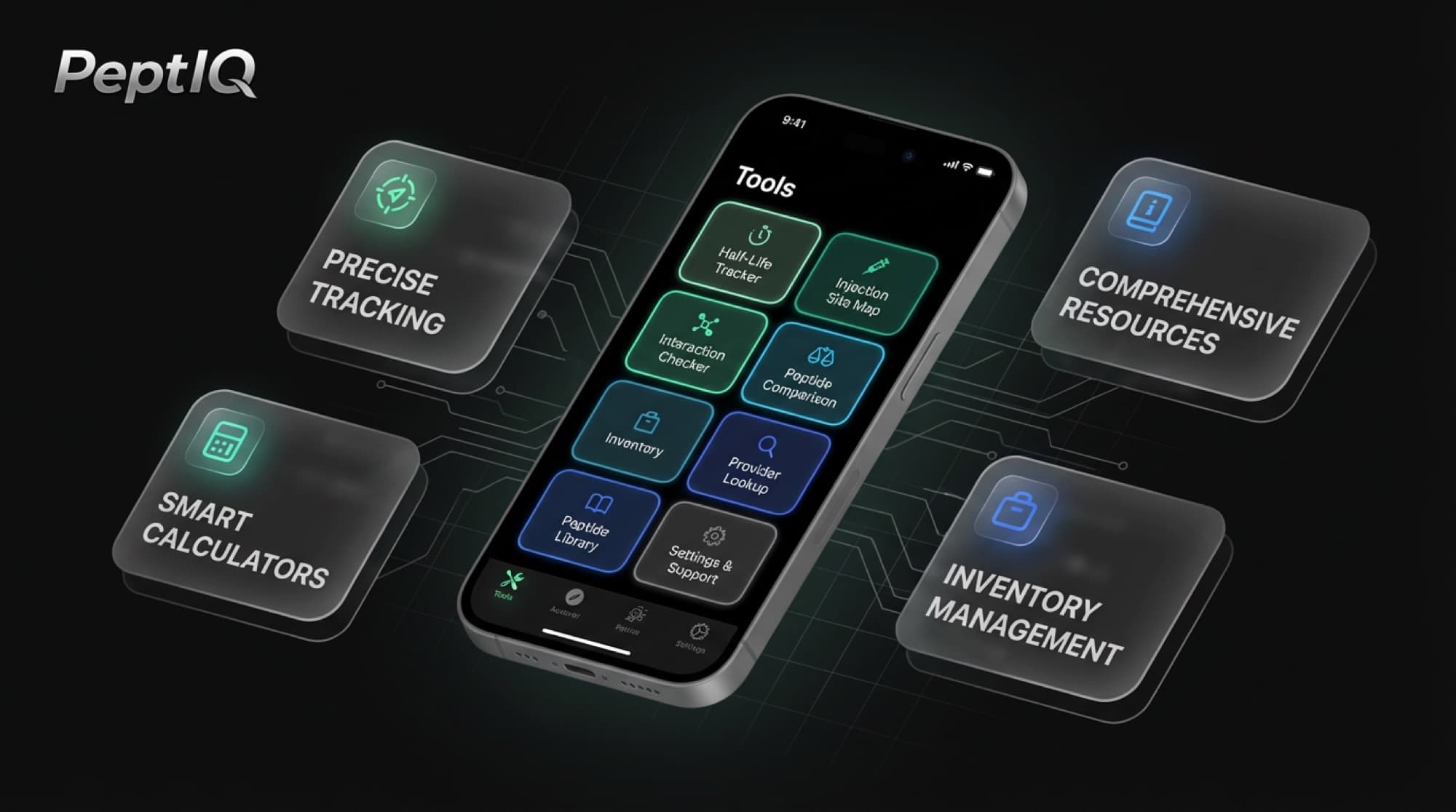
NIIMBOT Label Maker
Read moreDesign peptide vial labels with community templates and print to NIIMBOT D-series and B-series printers (D11, D110, B1, B21 and more) over Web Bluetooth, or download a PNG.
Opens: /tools/label-maker
Close
Peptide Glossary
Adherence
Read moreHow consistently a person follows a prescribed or planned medication schedule (including titration and ongoing weekly injections).
Opens: /glossary/adherence
CloseAmino Acid
Read moreOrganic compounds that serve as the building blocks of peptides and proteins. There are 20 standard amino acids that combine to form different peptide chains.
Opens: /glossary/amino-acid
Related: /blog/what-are-peptides-complete-beginners-guide
CloseAseptic Technique
Read moreThe set of sterile-handling practices that keeps peptides and injection equipment free from contamination during reconstitution and dosing.
Opens: /glossary/aseptic-technique
Related: /blog/how-to-reconstitute-peptides-step-by-step
CloseBacteriostatic Water
Read moreSterile water containing 0.9% benzyl alcohol as a preservative. Used for reconstituting peptides because it prevents bacterial growth, allowing multi-dose vial use.
Opens: /glossary/bacteriostatic-water
Related: /blog/bacteriostatic-water-guide-peptides
CloseBioavailability
Read moreThe proportion of a substance that enters circulation when introduced into the body and is able to have an active effect. Subcutaneous injection typically provides high bioavailability for peptides.
Opens: /glossary/bioavailability
CloseBPC-157
Read moreBody Protection Compound-157, a pentadecapeptide (15 amino acids) derived from human gastric juice. Researched for its potential tissue healing and protective properties.
Opens: /glossary/bpc-157
Related: /blog/bpc-157-complete-guide-benefits-dosage
CloseCJC-1295
Read moreA synthetic analogue of growth hormone-releasing hormone (GHRH). Available with or without DAC (Drug Affinity Complex) which extends its half-life.
Opens: /glossary/cjc-1295
Related: /blog/cjc-1295-dac-vs-no-dac-explained
CloseCo-Administration
Read moreGiving two or more peptides during the same session.
Opens: /glossary/co-administration
Related: /blog/peptide-stacking-combination-guide
CloseConcentration
Read moreThe amount of peptide per unit of liquid after reconstitution, usually expressed in mcg/mL.
Opens: /glossary/concentration
Related: /calculators/reconstitution
CloseDAC (Drug Affinity Complex)
Read moreA modification added to certain peptides that significantly extends their half-life by binding to albumin in the bloodstream.
Opens: /glossary/dac-drug-affinity-complex
Related: /blog/cjc-1295-dac-vs-no-dac-explained
CloseDesensitization
Read moreA reduction in receptor sensitivity that can occur with continuous use of certain peptides. Often addressed through cycling protocols.
Opens: /glossary/desensitization
Related: /blog/peptide-cycling-guide-when-to-take-breaks
CloseDiluent
Read moreThe sterile liquid added to lyophilized peptide powder during reconstitution, most commonly bacteriostatic water. The diluent volume you choose sets the final concentration.
Opens: /glossary/diluent
Related: /tools/bac-vs-sterile-water
CloseEpithalon
Read moreA synthetic tetrapeptide (Ala-Glu-Asp-Gly) based on the pineal peptide epithalamin, studied for telomerase activation and melatonin regulation.
Opens: /glossary/epithalon
Related: /blog/epithalon-longevity-peptide-guide
CloseEpithalon (Epitalon)
Read moreSynthetic tetrapeptide Ala-Glu-Asp-Gly (AEDG), also spelled Epitalon. Studied mainly in aging, pineal, and telomerase research contexts; human standardized clinical protocols remain limited.
Opens: /glossary/epithalon
CloseGH Secretagogue
Read moreCompounds that stimulate the pituitary gland to release growth hormone. Includes peptides like Ipamorelin, GHRP-2, GHRP-6, and Sermorelin.
Opens: /glossary/gh-secretagogue
Related: /blog/ipamorelin-growth-hormone-secretagogue-guide
CloseGHK-Cu
Read moreGlycyl-L-histidyl-L-lysine copper complex, a copper-binding tripeptide studied for collagen synthesis, wound healing, and skin matrix remodeling.
Opens: /glossary/ghk-cu
CloseGHRH (Growth Hormone-Releasing Hormone)
Read moreA hormone released by the hypothalamus that stimulates the pituitary gland to produce and release growth hormone. Synthetic analogues like Sermorelin mimic this hormone.
Opens: /glossary/ghrh-growth-hormone-releasing-hormone
Related: /blog/sermorelin-natural-growth-hormone-optimization
CloseGHRP (Growth Hormone-Releasing Peptide)
Read moreA class of synthetic peptides that stimulate growth hormone release through the ghrelin receptor. Includes GHRP-2 and GHRP-6.
Opens: /glossary/ghrp-growth-hormone-releasing-peptide
CloseHalf-Life
Read moreThe time required for the concentration of a peptide in the body to decrease by half. Important for determining dosing frequency.
Opens: /glossary/half-life
Related: /tools/half-life
CloseIpamorelin
Read moreA selective growth hormone secretagogue that stimulates GH release with minimal effect on cortisol or prolactin. Popular for its clean side effect profile.
Opens: /glossary/ipamorelin
Related: /blog/ipamorelin-growth-hormone-secretagogue-guide
CloseLyophilization
Read moreThe freeze-drying process used to preserve peptides. Lyophilized peptides appear as a powder or cake in the vial and require reconstitution before use.
Opens: /glossary/lyophilization
Related: /blog/how-to-reconstitute-peptides-step-by-step
CloseMelanotan II
Read moreA synthetic analogue of alpha-melanocyte-stimulating hormone. Researched for its effects on skin pigmentation and other physiological processes.
Opens: /glossary/melanotan-ii
Related: /blog/melanotan-2-tanning-peptide-guide
ClosePeptide Bond
Read moreThe chemical bond that links amino acids together in a peptide chain. Formed through a dehydration synthesis reaction between the carboxyl group of one amino acid and the amino group of another.
Opens: /glossary/peptide-bond
Related: /blog/what-are-peptides-complete-beginners-guide
ClosePeptide Stacking
Read moreThe practice of using multiple peptides simultaneously to achieve synergistic effects. Requires careful consideration of timing and compatibility.
Opens: /glossary/peptide-stacking
Related: /blog/peptide-stacking-combination-guide
ClosePT-141 (Bremelanotide)
Read moreA synthetic peptide that acts on melanocortin receptors. Researched for its effects on sexual function and libido enhancement.
Opens: /glossary/pt-141-bremelanotide
Related: /blog/pt-141-bremelanotide-libido-guide
CloseReconstitution
Read moreThe process of adding bacteriostatic water to lyophilized (freeze-dried) peptide powder to create an injectable solution.
Opens: /glossary/reconstitution
Related: /blog/how-to-reconstitute-peptides-step-by-step
CloseSemaglutide
Read moreA GLP-1 receptor agonist peptide used for weight management and blood sugar control. Available as both injectable and oral formulations.
Opens: /glossary/semaglutide
Related: /blog/semaglutide-weight-loss-peptide-guide
CloseSermorelin
Read moreA synthetic analogue of the first 29 amino acids of human GHRH. Used to stimulate natural growth hormone production.
Opens: /glossary/sermorelin
Related: /blog/sermorelin-natural-growth-hormone-optimization
CloseSubcutaneous Injection
Read moreInjection into the fatty tissue layer beneath the skin. The most common administration method for peptides, typically in the abdomen, thigh, or deltoid area.
Opens: /glossary/subcutaneous-injection
Related: /blog/peptide-injection-sites-rotation-guide
CloseTB-500 (Thymosin Beta-4)
Read moreA synthetic version of a naturally occurring peptide present in almost all human and animal cells. Researched for tissue repair and anti-inflammatory properties.
Opens: /glossary/tb-500-thymosin-beta-4
Related: /blog/tb-500-thymosin-beta-4-healing-guide
CloseTesamorelin
Read moreA synthetic form of growth hormone-releasing hormone approved for reducing abdominal fat in certain conditions.
Opens: /glossary/tesamorelin
Related: /blog/tesamorelin-visceral-fat-peptide-guide
CloseTirzepatide
Read moreA dual GIP and GLP-1 receptor agonist peptide. Represents a newer class of weight management peptides with enhanced efficacy.
Opens: /glossary/tirzepatide
Related: /blog/tirzepatide-dual-agonist-weight-loss
Close
FAQs
How do I compare peptide vial prices accurately?
Use a cost-per-mg workflow, not just sticker price. Two vials can look similar in price but differ significantly in active amount, concentration flexibility, and dose efficiency. A fair comparison includes cost per mg, cost per target dose, and estimated monthly spend at your actual schedule. Read related article
What is the fastest way to estimate monthly peptide cost?
Start with your target dose and frequency, then calculate dose count per month and multiply by cost per dose. If your schedule varies week-to-week, model both baseline and high-usage scenarios to avoid underestimating budget needs. Read related article
Can Peptide Prime help with reconstitution and syringe unit math together?
Yes. Peptide Prime includes reconstitution, dosage, and unit-conversion workflows so users can move from vial concentration assumptions to practical syringe-ready outputs in one process. Read related article
What does peptide half-life mean in practical terms?
Half-life is the time it takes for an estimated amount of compound to drop by 50% in the body. It helps users plan timing expectations and spacing decisions, but it does not by itself define complete clinical effect or individualized response. Read related article
How can I estimate when a peptide is mostly cleared?
A common rule of thumb is that around 5 half-lives approaches about 95% clearance, and around 7 half-lives approaches about 99% clearance. This is a simplification, but it provides a useful planning baseline for schedule discussions. Read related article
Can half-life calculators replace medical advice?
No. Half-life and clearance calculators are educational planning tools. They are useful for understanding timing concepts but do not replace individualized clinical guidance or safety review.

All of this in the app
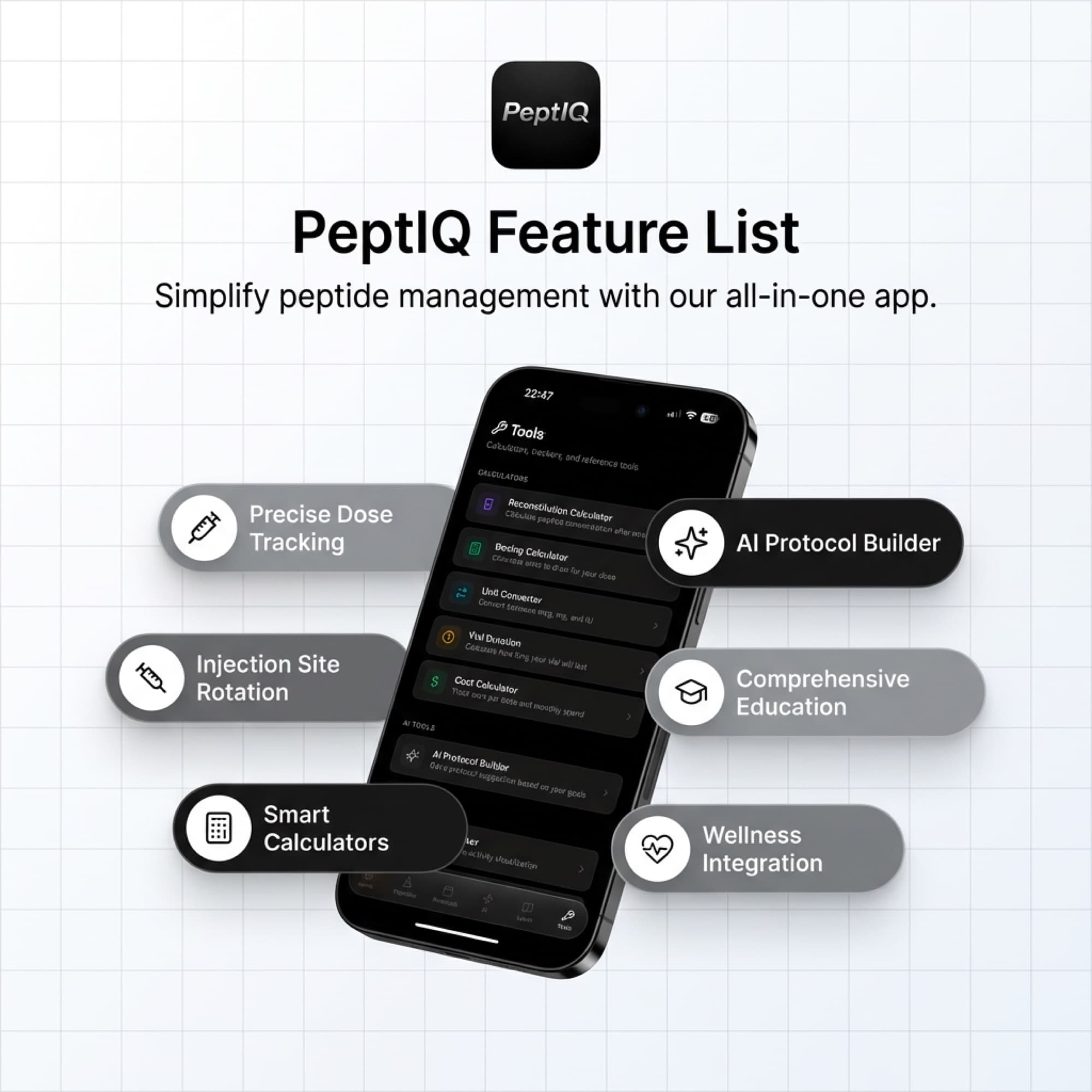
- 9+ Core calculators
- Top 50 Shelf-life references
- Live FDA status updates
- Fast Interaction checks
Featured
Fact-Check aPeptide Claim
Drop an Instagram or TikTok link and get an AI-powered verdict on every peptide claim — backed by PubMed, Europe PMC, and Semantic Scholar. See if the science actually checks out.
Free. Open in the browser.
Calculators
DosageCalculator
Convert target dose (mcg) to syringe units based on vial concentration.
Free. No signup required.
Calculators
ReconstitutionCalculator
Calculate concentration (mcg/mL) after mixing peptide with bacteriostatic water.
Free. No signup required.

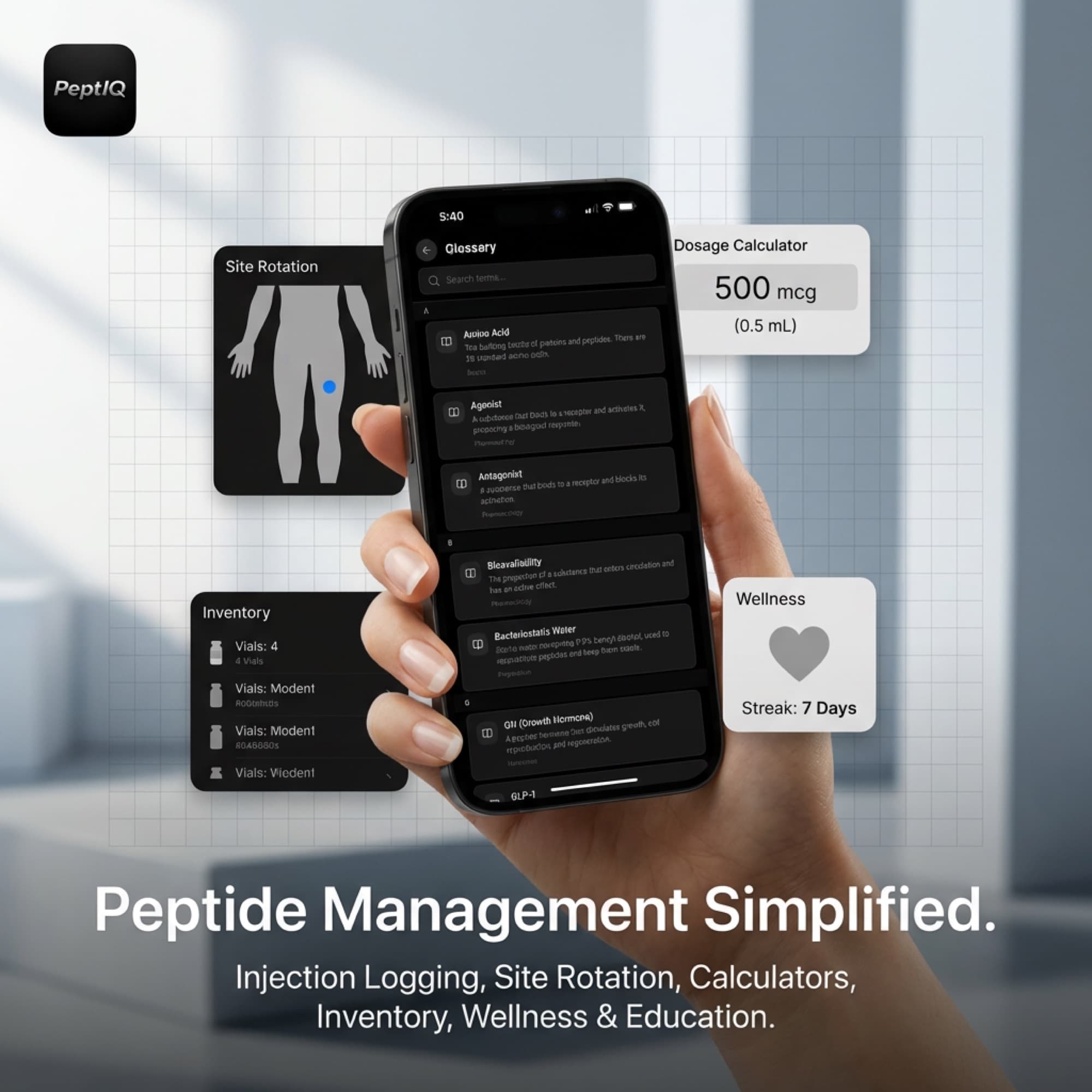
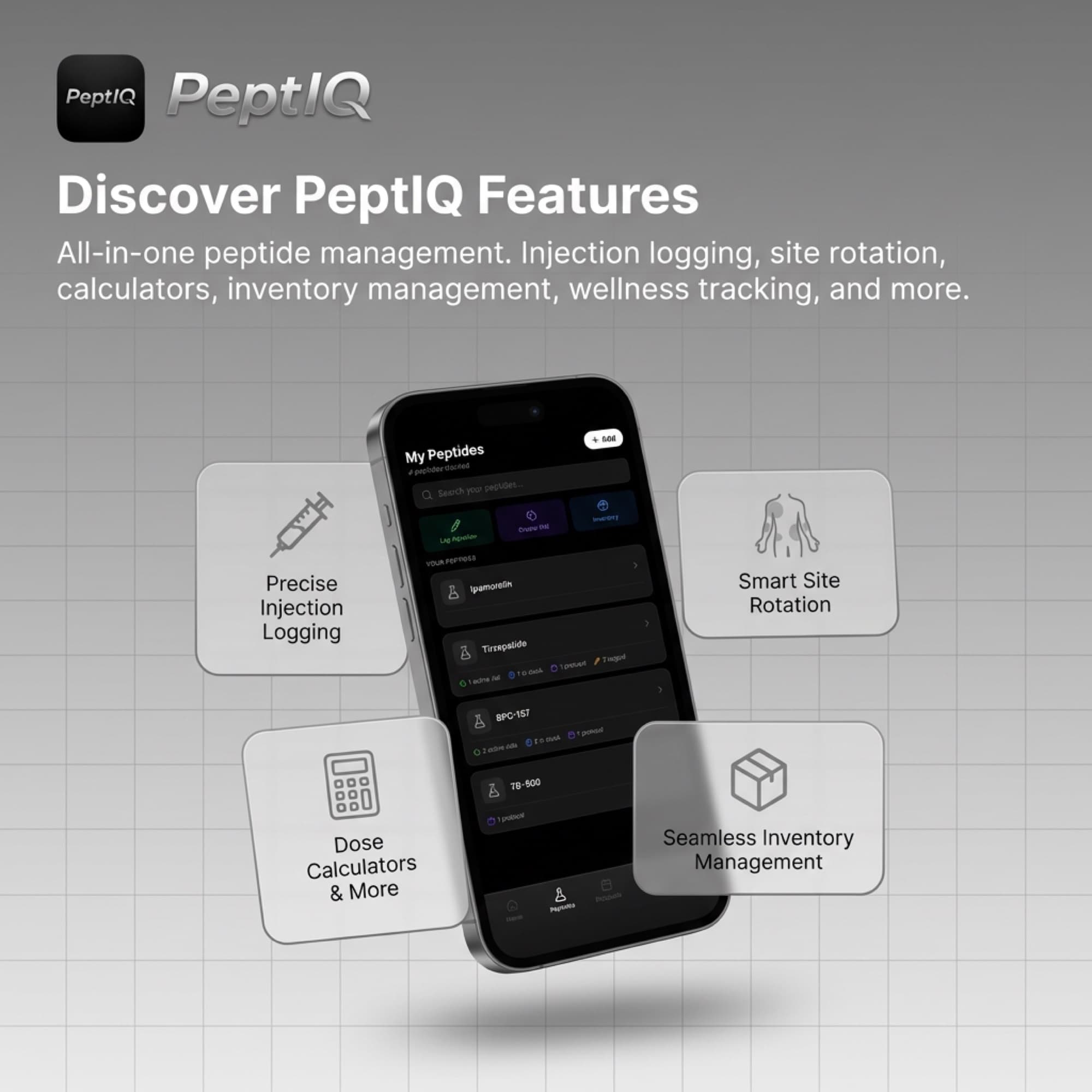
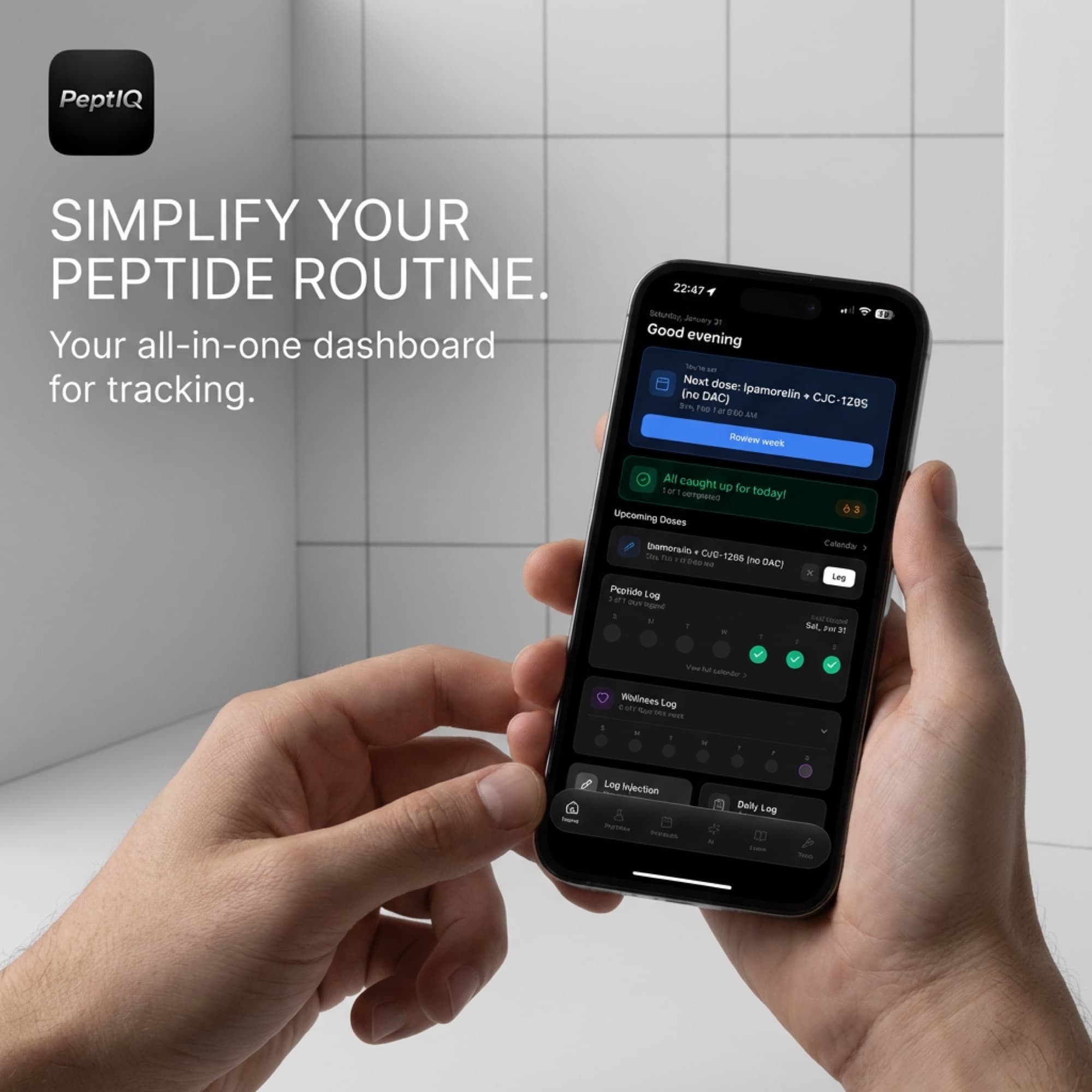
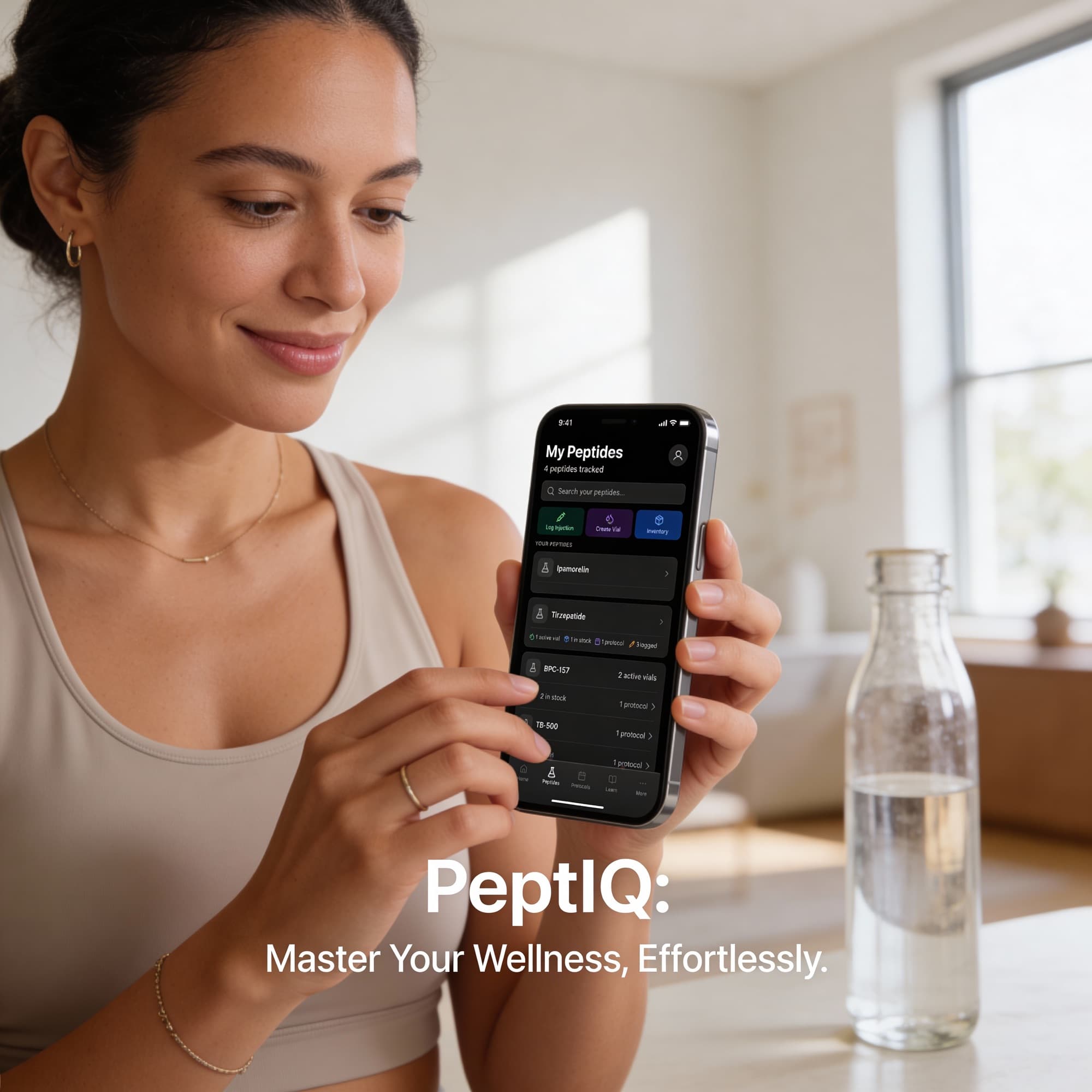
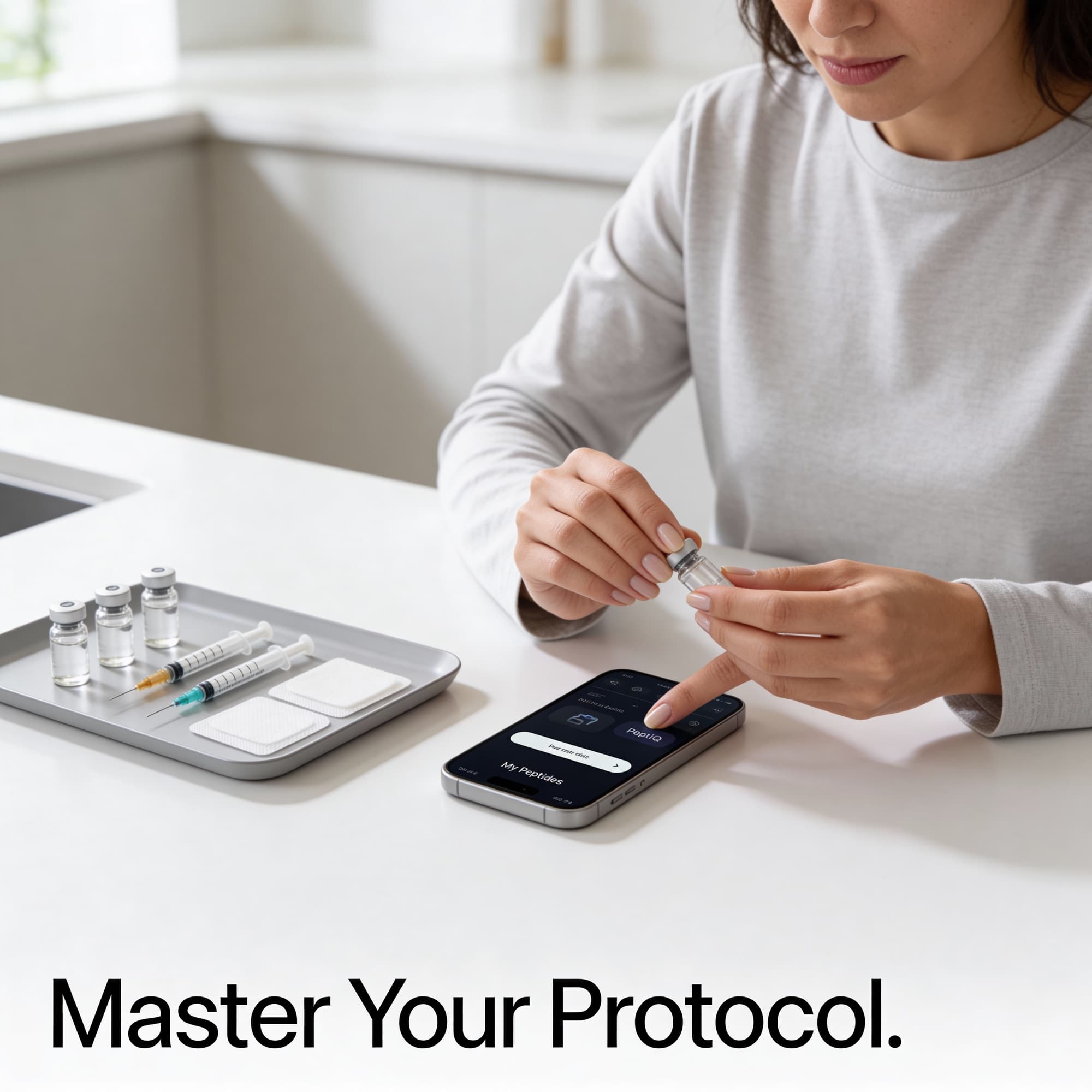

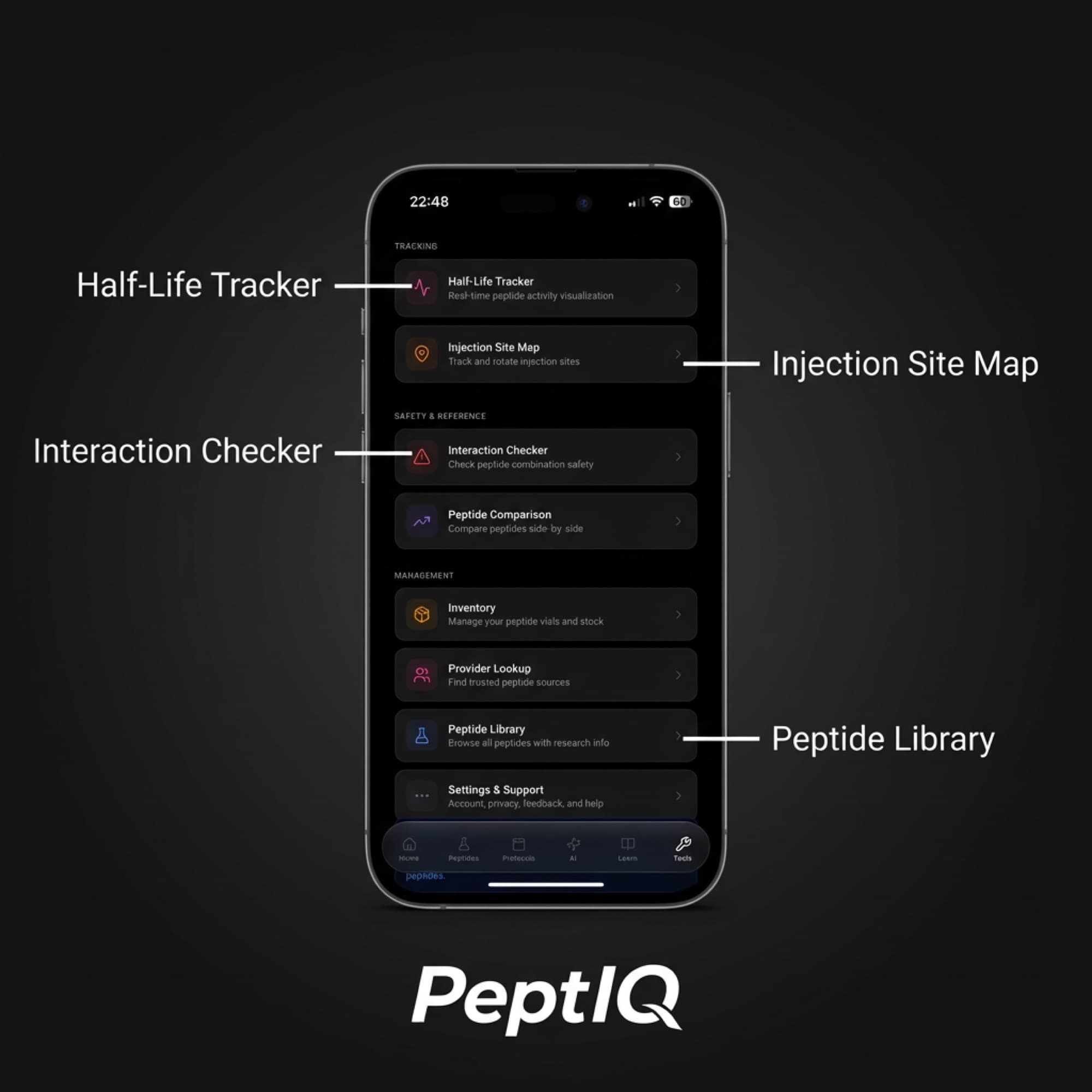
What to Look forin a Peptide App
- Protocol scheduling with reminder flexibility
- Accurate peptide calculator and conversion tools
- Injection site tracking and inventory workflows
- Educational resources for peptide research context